Cross Stitch vs Embroidery: What's the Difference?
People use these terms interchangeably. They're not the same thing.
Here's what you actually need to know.
The Simple Version
Cross stitch: You make X shapes on gridded fabric following a pattern. Structured, repetitive, satisfying if you like knowing exactly what goes where.
Embroidery: You use various stitches (running stitch, satin stitch, French knots, whatever) to create designs on any fabric. More free-form, more creative freedom, more "I'm an artist" vibes.
Both involve needle and thread. Both make pretty things. That's where the similarities end.
The Actual Differences That Matter
Fabric
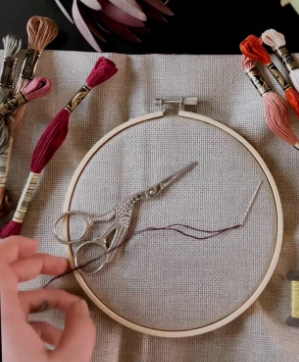
Cross stitch uses Aida or evenweave fabric - woven fabrics with a clear grid of holes. You can see exactly where each stitch goes. The grid is the whole point.
Embroidery uses basically any fabric. Cotton, linen, denim, felt, whatever. No grid required. You draw or transfer your design onto the fabric and stitch over it.
Patterns
Cross stitch patterns look like pixel art. Each square on the pattern represents one X stitch on your fabric. You follow the chart exactly, placing stitches where the pattern tells you to.
It's basically paint-by-numbers but with thread.
Embroidery patterns are more like drawings. You transfer the design to your fabric (with transfer paper, a water-soluble pen, or just tracing), then decide which stitches to use and how to fill in the design.
More artistic freedom. More ways to mess it up if you don't know what you're doing.
Stitches Used
Cross stitch primarily uses... cross stitches. Shocking, we know.
You might also use backstitch for outlines or French knots for details, but 95% of the time you're making X shapes. Same stitch, over and over, in different colors.
Embroidery uses dozens of different stitches. Satin stitch for smooth filled areas, running stitch for outlines, French knots for texture, chain stitch for borders, lazy daisy for flowers... the list goes on.
Learning embroidery means learning multiple techniques. Learning cross stitch means mastering one very specific thing.
Skill Curve
Cross stitch is easier to start. Seriously. If you can count squares and make an X shape, you can cross stitch. The hard part is patience and not losing count, not the actual stitching technique.
Our beginner kits include everything you need and full instructions. Most people get the hang of it within the first hour.
Embroidery has more techniques to learn upfront. You need to understand different stitches, when to use each one, how to get smooth satin stitch coverage, how to make French knots that don't look sad.
Not impossible, just a steeper learning curve.
How Long Projects Take
Cross stitch is predictable. You can look at a pattern and estimate fairly accurately how long it'll take based on stitch count. Small projects take 5-8 hours, medium ones 15-20 hours, large ones 30+.
Embroidery is harder to estimate because different stitches take different amounts of time, and coverage varies by design. A simple outline embroidery might take a couple hours. A heavily textured piece with satin stitch filling and French knot details could take days.
Final Look
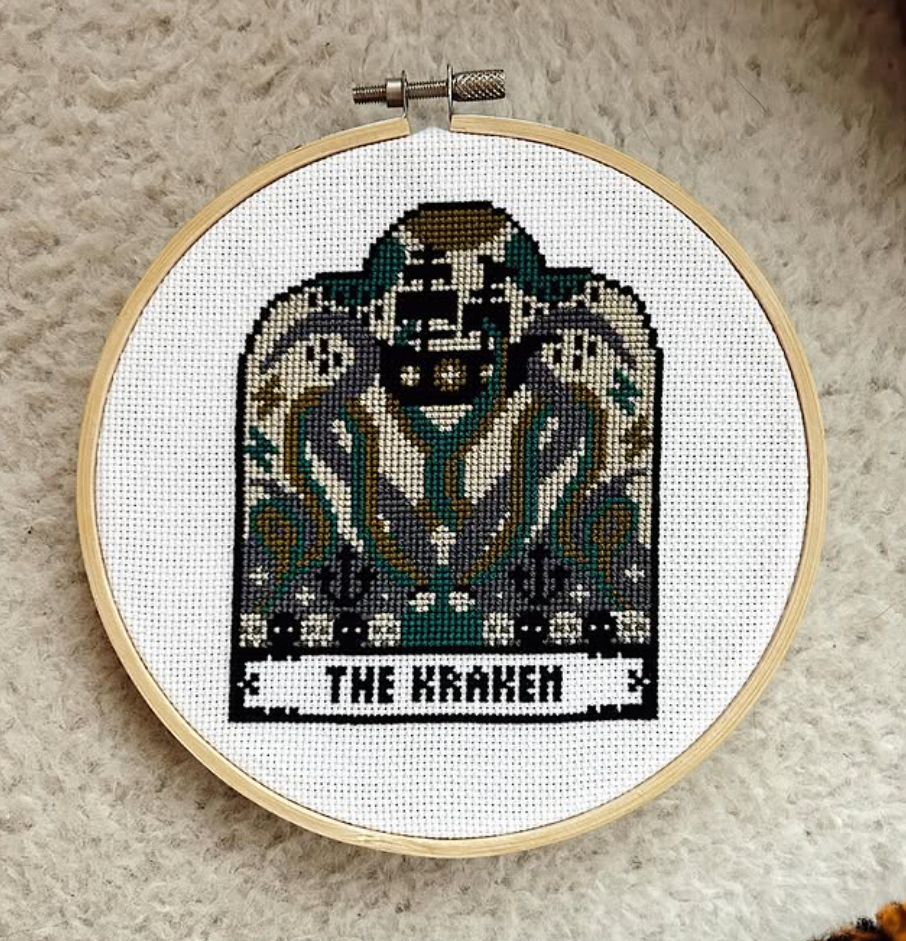
Cross stitch has a distinct pixelated look. Even really detailed cross stitch still looks like it's made of tiny squares. This is either charming or limiting depending on what you're trying to create.
Works brilliantly for geometric designs, fonts, anything with clear lines. Less great for realistic portraits or flowing organic shapes.
Embroidery can look more painterly and organic. You can get smooth gradients with long-and-short stitch, realistic textures with French knots, flowing lines with stem stitch.
More versatility in terms of what you can create visually.
What You Can Make
Cross stitch is perfect for:
-
Framed art (most common use)
-
Ornaments
-
Bookmarks
-
Patches (if you use waste canvas)
-
Small decorative pieces
Embroidery works for:
-
Customising clothing (embroidering on jeans, jackets, shirts)
-
Decorating home textiles (pillows, tea towels, napkins)
-
Making patches and badges
-
Creating textile art
-
Personalizing basically anything fabric
Which One Should You Learn?
Start with Cross Stitch If You:
-
Want clear instructions to follow
-
Like structured, methodical activities
-
Find satisfaction in repetitive tasks (it's genuinely meditative)
-
Want to see exactly what the finished piece will look like before you start
-
Prefer minimal decision-making while crafting
Cross stitch is brilliant if you want your brain to switch off while your hands make something. Very low-stress once you get started.
Start with Embroidery If You:
-
Want more creative freedom
-
Like learning different techniques
-
Want to customize your own clothing or home items
-
Prefer drawing/painting to coloring-by-numbers
-
Don't mind a bit more trial and error
Embroidery gives you more room to experiment and make design decisions as you go.
Or Just Do Both
They're not mutually exclusive. Lots of people cross stitch and embroider depending on the project.
Many needlework projects actually combine both - cross stitch for the main design with embroidery details like French knots or backstitch outlines.
Can You Switch Between Them Easily?
Kind of.
The basic needle skills transfer. If you can thread a needle and pull thread through fabric without swearing, you're halfway there for both.
But the mindset is different. Cross stitch is methodical and precise. Embroidery is more interpretive and flexible.
Some people love both. Some people try one, realize they prefer the other, and stick with that.
Our Take (Obviously Biased)
We make cross stitch kits because we love the structure of it. There's something satisfying about following a pattern and watching a design emerge exactly as planned.
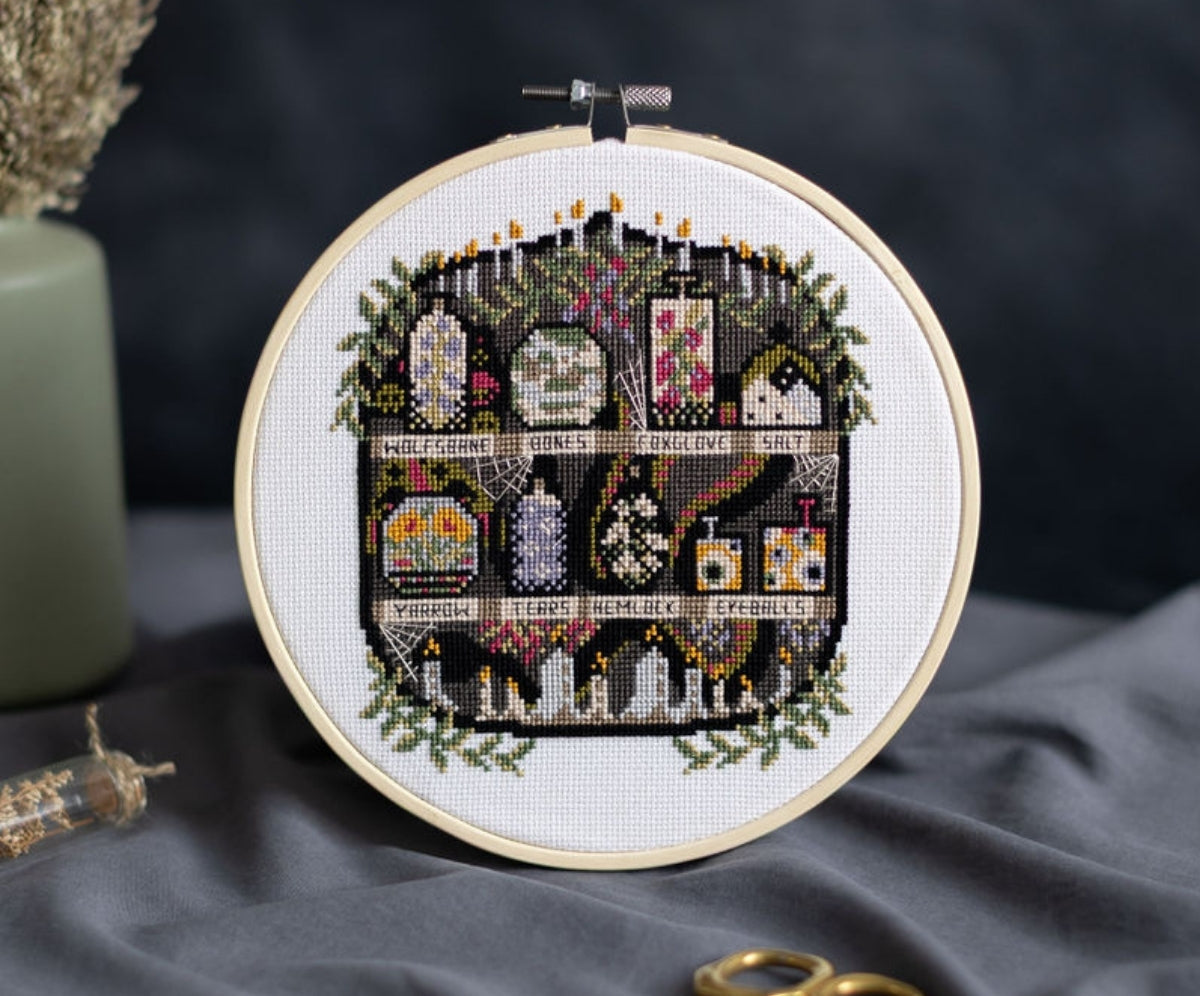
Plus, modern cross stitch doesn't have to look like your gran's samplers. Gothic skulls, tarot cards, mystical symbols - cross stitch works for alternative aesthetics, not just cottage-core florals.
The pixel-art quality actually works brilliantly for bold, graphic designs.
But embroidery is cool too. Just not what we specialise in.
FAQ
Is cross stitch a type of embroidery?
Technically yes - cross stitch is a specific type of embroidery using one particular stitch on gridded fabric. But in practice, people use "embroidery" to mean everything except cross stitch.
Which is easier for beginners?
Cross stitch. One stitch to learn, clear patterns to follow, gridded fabric that tells you exactly where to stitch. Embroidery requires learning multiple stitches and has more room for confusion.
Can you cross stitch on regular fabric?
Not easily. Cross stitch needs a clear grid to work. You can use waste canvas on regular fabric (it creates a temporary grid), but it's fiddly. If you want to stitch on regular fabric, embroidery makes more sense.
Which is faster?
Cross stitch is generally faster for comparable-sized projects because you're using the same stitch repeatedly. Embroidery involves more varied techniques which tend to take longer.
Do you need different supplies?
Mostly yes. Cross stitch needs gridded fabric (Aida), a blunt tapestry needle, and a pattern chart. Embroidery needs regular fabric, a sharp needle, and often transfer paper for designs. Thread works for both (DMC embroidery floss is standard for both crafts).
Can I use the same needle for both?
No. Cross stitch uses blunt tapestry needles (they go through the fabric holes, not pierce the fabric). Embroidery uses sharp needles that pierce the fabric. Using the wrong needle makes everything harder.
Ready to start? All our cross stitch kits include everything you need - fabric, threads, needle, hoop, and pattern. No guessing, no extra shopping, just open and start stitching.